A diagnosis involving the gallbladder, appendix, abdominal wall, intestines, colon, rectum, or another part of the digestive system may eventually require surgical evaluation. At that point, patients often focus on the procedure itself. For people in Panvel, choosing a gastro surgeon should also involve understanding the surgeon's approach to diagnosis, surgical planning, minimally invasive options, and follow-up care.
Gastro surgery covers a broad range of conditions, so the appropriate treatment depends heavily on the disease being managed.
Start With the Exact Diagnosis
A surgical recommendation should be based on a clear understanding of the condition.
Depending on the symptoms, evaluation may involve physical examination, blood investigations, ultrasound, CT imaging, endoscopy, colonoscopy, or other tests.
Not every patient needs every investigation.
The surgeon should explain what has been diagnosed, which findings are important, and why surgery is being considered.
Check Whether Minimally Invasive Options Are Relevant
Laparoscopic and robotic techniques have expanded the options available for selected gastrointestinal operations.
Laparoscopic surgery uses a camera and specialized instruments introduced through small incisions.
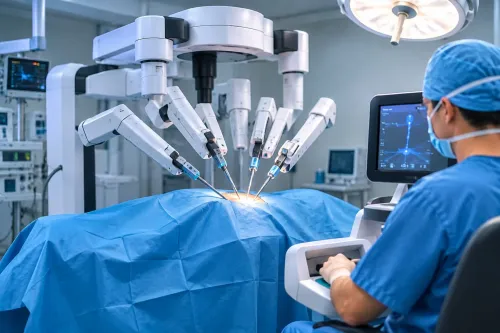
Robotic-assisted surgery also uses small incisions in many procedures, while the surgeon controls robotic instruments from a console.
Neither approach should be chosen merely because it sounds more advanced.
The relevant question is whether the technique offers an appropriate way to manage the patient's particular condition.
Ask About Experience Relevant to Your Condition
Gastro surgery includes many different procedures.
A consultation for gallbladder stones is very different from an evaluation for colorectal disease or a complex abdominal operation.
Patients can ask about the surgeon's experience with the particular type of procedure being recommended rather than relying only on broad labels such as 'advanced surgery.'
Expect a Discussion of Alternatives
Good surgical decision-making includes understanding alternatives.
Depending on the condition, options might include medical management, observation, endoscopic treatment, open surgery, laparoscopic surgery, robotic-assisted surgery, or another procedure.
Not every condition has all these options.
The surgeon should explain why one approach is being recommended in the patient's specific situation.
Understand Risks Along With Benefits
No surgical procedure is completely risk-free.
The risks vary according to the operation, underlying disease, age, overall health, and other factors.
A responsible consultation should discuss relevant potential complications rather than focusing only on benefits.
Patients should also understand whether there is a possibility that a minimally invasive operation may need to be converted to open surgery.
Review the Recovery Plan
Surgical care continues after the operation.
Before proceeding, patients should understand:
- Expected hospital stay
- Pain-management plan
- Wound-care instructions
- Dietary recommendations
- Activity restrictions
- Follow-up schedule
- Return-to-work guidance
- Symptoms requiring medical attention
These practical details can be particularly important for patients managing work and family responsibilities.
Consider Communication During Consultation
Patients should be able to ask questions without feeling rushed into making a decision.
A clear consultation should help answer:
- What exactly is the diagnosis?
- Why might surgery be necessary?
- Which procedure is recommended?
- Why is that approach suitable?
- Are alternatives available?
- What preparation is required?
- What should recovery realistically involve?
Clear communication is particularly important when advanced technology such as robotic surgery is being discussed.
Make Technology Part of the Decision Not the Whole Decision
Robotic and laparoscopic techniques can provide important minimally invasive options, but successful surgical planning involves more than selecting technology.
Diagnosis, patient selection, surgical judgment, anaesthesia, hospital support, postoperative monitoring, and follow-up all contribute to care.
Dr Chirag Vaja provides general, laparoscopic, robotic, and gastro surgical evaluation for patients in Panvel. A surgical consultation can help determine whether an operation is required and which approach may be appropriate based on the diagnosis and individual clinical factors.
Choosing a gastro surgeon should ultimately give the patient clarity about the condition, confidence in the treatment plan, realistic expectations about recovery, and a clear understanding of the available surgical options.
Keywords